Overview
 Unity
 Steam
 Xbox
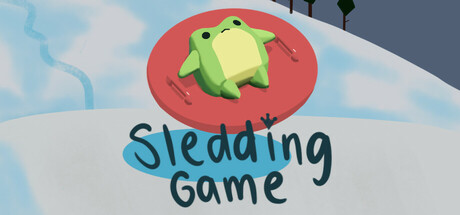
Sledding Game is a co-op multiplayer sledding sandbox where friends hang out on a snowy mountain: racing, fishing, playing mini-games and sledding together. I worked on it at Binary Spiders, where our team focused on porting the game for its Xbox Game Pass launch, and on title stability. I was mostly responsible for the Xbox port, online services, localisation, and title stability.
Port and Certification
As part of the certification process, I helped audit the build against platform requirements, identified compliance gaps, and implemented the changes needed to pass certification. My focus included platform-aware UI and systems: hiding PC-only elements such as quit buttons and resolution menus, and enabling console-specific flows like preview/consent dialogues and feedback prompts that respect user permissions. I also contributed platform-specific code paths to ensure a consistent, controller-first experience across devices.
I did this by creating some easy-to-use, platform-specific components that gave developers an easy way to implement platform specific UI. I made some components that would automatically hide or show components based on their platform, and components that would change a component's navigation based on their platform. This allowed developers to easily create a UI that would work well on both PC and console without having to worry about the underlying platform differences.
I also worked deeply in the company's porting library, creating easy, and reusable async functions that would handle the various platform specific flows, such as showing the preview/consent dialogue on each platform, and showing the feedback prompt on both PC and Xbox. This allowed developers to easily implement these flows without having to worry about writing platform specific code.
Networking and Online Services
As a core part of the Xbox effort, I helped migrate the networking stack from Mirror to FishNet, using the FishyEOS transport. Alongside that shift, I reworked matchmaking and the lobby explorer to use Epic Online Services (EOS). This allowed us to offer a unified lobby experience between Xbox and Steam with a common backend. I contributed to integration, data flow updates, and the glue code required to keep features consistent across platforms while simplifying maintenance.
Localisation
As part of the Xbox effort, we localised the game to 16 languages. I built custom tooling to extract, package, and re-import localisation data, streamlining collaboration with our localisation team. This included an internal API and in-engine utilities to surface missing or outdated strings, making it easy for designers and QA to spot unlocalised content early. The result was a faster, less error-prone workflow that kept text accurate and up to date across all supported languages.
One of the tools I created was an automatic prefab checker. Whenever a developer would open a prefab, this tool would check all the text components for the appropriate localisation components and setup. If any issues were found, a popup menu would appear, outlining the offending texts. From there, developers can click a "fix" button that would add the appropriate components, and link the component up properly, and would only need the developer to then outline the localisation key to use.
Gameplay Features
After launch, I moved onto building new features for the game.
Rideable Snowballs
When a rolling snowball hits a player, the server converts the hit point into a direction in the ball's local space and stores it as that player's "slot". Every frame the rider is placed back on that slot, so they stay pinned to the exact spot they were hit and tumble around with the ball, posed belly-down facing into it. Short grace periods stop you being caught by a ball you've just rolled or just jumped out of, and jumping out launches you sideways relative to the ball's direction of travel while keeping some of its momentum. All of the rider maths lives in a pure static class so it could be unit tested outside of Unity, and I later let the yetis target snowball riders and kick them home, ball and all.
Hide and Seek and Infection Tag
I built hide and seek and infection tag as two modes of one server-authoritative mini-game system. A player starts a game by placing a flag, everyone nearby who isn't already racing or in another mini-game joins, and one of them is picked at random to be the seeker. Each game moves through countdown, playing and finished phases on the server. Roles are synced to every client so nameplates can be coloured by team, while the full game state is only sent to the players taking part.
In hide and seek, the seeker covers their eyes during a 30-second countdown, and hiders' nameplates and map markers are hidden from them for the whole round. In infection tag, the countdown is shorter, and anyone who gets caught becomes infected and joins the hunt. Every knockdown in the game is routed through the manager, so only a push from a seeker counts as a catch, and players who are locked in place can't be knocked over. Twice a second the server checks the play area, and anyone who strays outside is teleported back inside and dropped onto the ground with a raycast, while a boundary sphere fades in as you approach the edge.
If any hiders survive the three-minute round they win; otherwise the original seeker does. Caught players are ranked by how long they lasted, and seekers earn points for each catch, scaled by the number of players. The scoring is a pure static class with its own unit tests, and I added a /boundary dev command and panel to tune the play area live.
Fish Book
I built a fish book backed by a per-species record kept separately from the inventory, so selling a fish never erases it from your collection. Each record tracks catch counts by variant (normal, shiny and aurora), your largest catch and the date you first caught it, and a badge unlocks once you've caught enough of each variant. Older saves only stored simple shiny and aurora flags, so the record migrates them on the fly. The page and spread maths for the book is also pure and unit tested. Alongside it I added twelve new fish and reworked the fish inventory with sorting, favourites and a sell tray.
Progress and Personal Bests
All of this feeds into a new progress panel, with tabs for stats, fishing and sleds. I also added personal best times for races; runs in lobbies with gameplay modifiers or on custom-built races don't count, so bests stay fair.
Weather, Day/Night and Ground Fog
Weather and Day/Night Cycle
I integrated COZY: Stylized Weather 3 and built a server-driven day/night cycle on top of it. The server owns the clock, with day running from 06:00 to 18:00 and night from 18:00 to 06:00, each lasting fifteen minutes of real time, and clients follow its time so everyone in a lobby sees the same sky. The server also changes the weather automatically every few in-game hours, and I added a /weather chat command and a dev panel to force any weather or time for testing. Hosts can turn the cycle off when creating a lobby, and it's shown as a tag in the lobby browser so players know what they're joining.
Ground Fog
For the night atmosphere, I wrote a custom screen-space ground fog as a URP renderer feature, drawn in a single full-screen pass after opaques. At load it merges the mountain's terrain tiles into one height texture (R16, falling back to half floats on GPUs that don't support it) along with a slope mask, so the fog hugs the ground and pools in valleys. Designers can place fog zones as boxes or cylinders that merge together, and a camera-centred "wake" texture stamps nearby players as soft circles that slowly refill, so walking or sledding through the fog parts it behind you. The fog is kept off the cameras that capture snow trails so it never bakes into the snow.
Halloween
Seasonal Events System
For Halloween, I built a seasonal events system so content can switch on and off throughout the year. At launch the game works out the current event from the local date: Halloween runs from 14 October to 2 November, Christmas over December and early January, and Easter for the week either side of Easter Sunday, which is calculated using the Meeus/Jones/Butcher algorithm. Once you're in a lobby, the host's event and a per-lobby seed are written into the lobby attributes, so every player sees the same event, even across time zones. Any system can listen for changes through a single event.
To make it easy for the rest of the team to use, I made a SeasonalEventVisibility component that designers can drop on any object to show or hide it during chosen events, plus editor menu items to force any event while testing. Each event can also set the time of day new sessions start at, so Halloween starts at 9pm, with longer nights, and the music controller filters its playlist by event so the Halloween track plays first.
Halloween Content
On top of the system, I added Halloween versions of existing mechanics: the cups, yeti and snowman (including eyeballs that look around), a Halloween trinket machine and pack, and seasonal sleds such as the cauldron, pumpkin and witch's broom.
Halloween UI
I updated the UI so Halloween items stand out wherever they appear. Item cards in the shop, inventory and trinket displays show a Halloween overlay frame, driven by a seasonal tag on each item's display data rather than per-prefab setup. Seasonal items can only be bought from the shop while their event is running, but anything you already own stays usable all year, and the shop lists rebuild themselves live when the event changes.
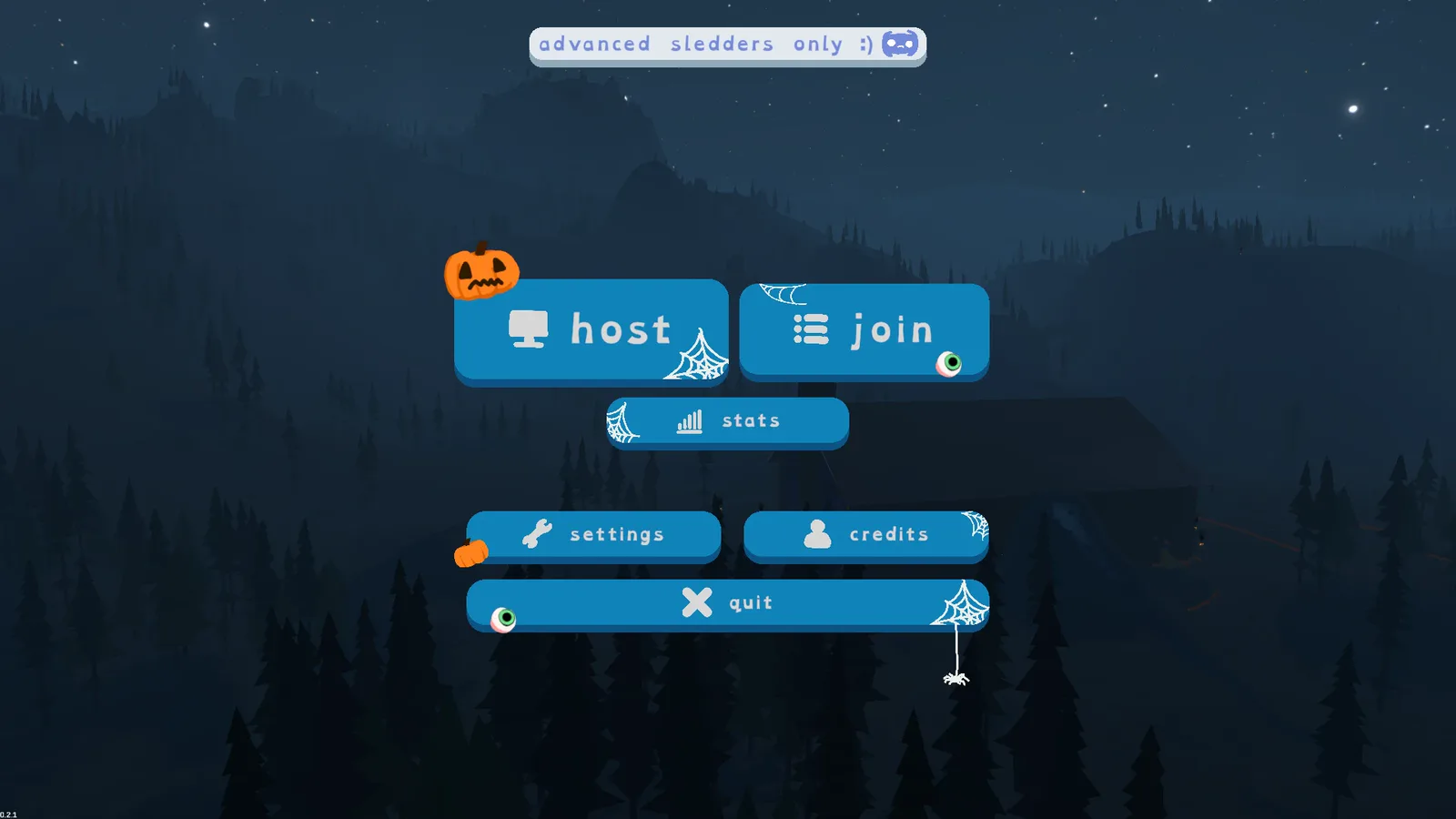
On the sled progress page, seasonal sleds are sorted into their own group after the regular ones, and I rebuilt the level bar to draw a tick for every level with a number every fifth level, generated at runtime from the max level. During Halloween the main menu also switches to night by moving the night-time post-processing volume out from under its network object, so the menu gets the spooky look before you've joined a session.
Procedural Corn Maze
Seeded Across the Network
The Halloween corn maze is generated fresh every session. Rather than sending the whole layout over the network, the server rolls a single seed and syncs it to every client through FishNet, and each client builds the identical maze locally from it, so the maze changes each time but everyone is lost in the same one.
Maze Generation
The generator is a seeded growing-tree algorithm over a logical grid of rooms and walls. A "branchiness" value controls how it picks the next cell to grow from, so it can produce anything from long winding corridors to lots of short dead ends. The logical grid is then widened into 1 m corn blocks with configurable corridor widths and wall thicknesses. The entrance is always the middle of the bottom edge so the maze lines up with the world around it, and rooms near the centre are kept out of the maze to leave a round clearing in the middle. To give the clearing exactly one door, a breadth-first search measures the walking distance from the entrance, and the door is carved on whichever side has the longest walk. The same distance field is walked back down to find the solution route, keeping only the corners. The generator is a pure static class, so it's fully unit tested.
Building the Maze
When the maze is built, each corn block gets a random 90° rotation from a second RNG derived from the same seed, so the walls don't look repetitive but stay identical on every client. Underneath the corn, I procedurally generate a raised dirt bed as a single mesh, so it's one draw call. Every exposed edge slopes down into the snow along a quarter-ellipse profile, outer corners are rounded off with a fan of the same profile, and UVs are tiled in world space so the texture lines up seamlessly. The mound drops below the ground, so it still reads as soil wherever player trails push the snow lower.
Finishing Touches
The corn blocks are statically batched, lanterns are placed at a small share of dead ends (kept low because each one is a point light), and the third-person camera is pulled in while you're inside so you can't simply look over the corn. I also added a no-build zone around the maze so players can't place objects inside or across its walls, fenced it in, and hid the witch's broom sled inside it as an unlockable for players who make it through.